Yellow Boots introduction
Notes from the semi-fictional author
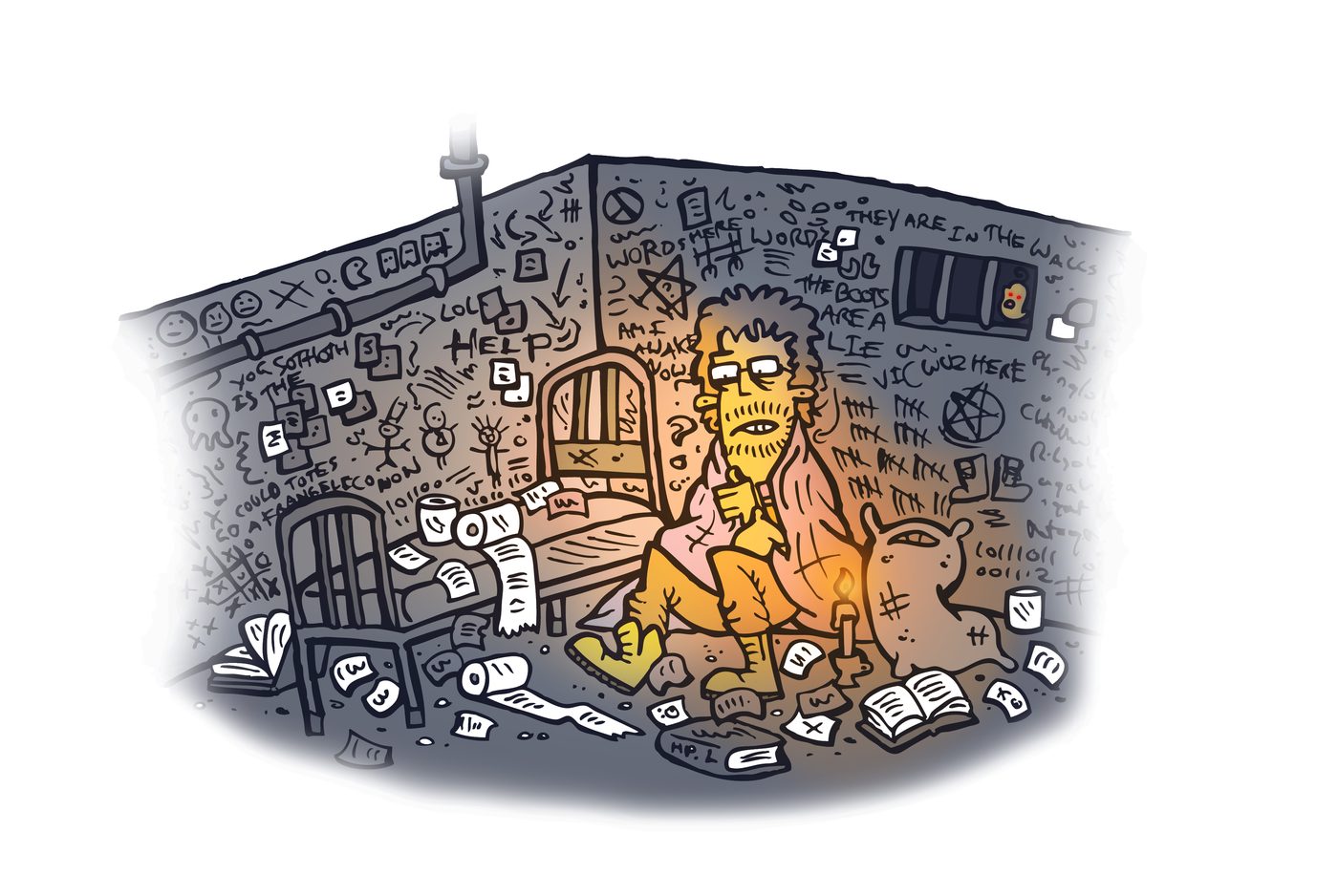
This isn’t a novel. That’s mostly because writing an actual novel seems too much like hard work, and as a veteran freelance PC games writer - I always hesitate to use the word journalist - hard work is not part of my skill set.
No, this is a collection of columns and medium-length pieces I wrote over a ten year period from 2001 to 2011. It was while I floated around Sydney, Australia and struck up this sort of relationship I suppose with a magazine called PC Quinine.
It was a PC gaming magazine - still is, at the time I write this, though if you’re reading in the year, say 2145, maybe you have a very different idea of what a magazine is. Maybe to you a magazine is the small box of bullets you jam in your rifle to fend off the zombie hordes. But back in the first decade of the 21st Century, a magazine was a collection of articles bound into a roughly A4-sized soft-cover book and sold at newsagents for $10.
Most of my ersatz career in magazines, people told me magazines were dying. For a decade, fifteen years, twenty years, they told me magazines were dying. All I knew was I kept submitting my columns, and they kept appearing in the magazine.
PC Quinine’s job was to review new PC games and benchmark new PC tech. The PC gaming.. hobby I guess? … was a bit of a strange one. In a world where consoles like the Xbox or PlayStation could be bought for as little as $200 depending on the desperation of the bricks-and-mortar store, to spend $2000 or more to play the same games on a PC in slightly higher resolution was… eccentric. My kind of eccentric.
Being a PC guy was kind of like being a car enthusiast. You could either buy expensive branded PCs, or build your own PC from a collection of aftermarket parts. Although that analogy isn’t quite right: if you build your own PC - or system, or rig, or machine, but NEVER “computer” - it’s more like building an entire car out of aftermarket parts. The aftermarket is the entire market, as it were.
Anyway, in the early part of 21C, in a country called Australia, there were around 30,000 dudes (and it was almost entirely dudes) excited enough about playing games on the PC to buy a monthly magazine.
Most PC games were developed by major US publishers, sort of like a slightly embarrassing junior version of Hollywood. Big money was spent to produce slick games, of which a handful would sell enough copies to justify their exorbitant development costs, and an even smaller handful of that handful would make wildly insane profits. It was these last very few games that perpetuated the myth that the video games industry was a place where anyone with half a brain and a decent knowledge of C+ could make a million dollars.
Someone once told me that, in Australia alone, over 5000 games are released each year. Of those, seven of them sell more than 50,000 units. Seven. Yet on it goes.
What happened was that somehow, I don’t even know how, I ended up becoming the guy who travelled around Australia to interview the absolute fringe of the absolute fringe of the game development community. The most broken concepts. The most hopelessly underfunded or misdirected companies. The drunkest publishers and distributors.
I was the guy, for ten years, who wrote the funny page at the end of the magazine. Lots of mags have this page, the page where any pretence of important or serious reportage is abandoned for a final 800 words.
Eventually I stopped writing the column. Why? Well, consider that a sort of teaser. But the point is, my columns went on to a USB hard drive and that hard drive went up into my mother’s cupboards along with all the hardcopy magazines to which I had, up until that point, contributed.
Just recently, my crazy ex-third flatmate pointed out to me that I could collate all the columns, fix the typos, adjust the inconsistencies, and bundle them all into this - a sort of book. Not a novel. A book.
Mere days after that I discovered the USB hard drive had been hopelessly corrupted by both a virus it had picked up from a Russian torrent site, and also a fast-growing mould it had picked up from being shoved in a cupboard full of rising damp. So I had to re-type all the columns by hand.
This book is not an exhaustive collection of every column I ever wrote. Many of my columns were - how shall I put it - incredibly stupid. These are the cream of the crop, such as it is.
They show the slow evolution of the PC gaming scene in Australia from the height of its Golden Age in the early part of the decade through to a sort of resigned decline back to normality by 2011.
PC gaming started as a niche hobby, supported by an intense and slightly furtive underground of gamers that really are, in so many ways, hardcore. And today, as I write this, the PC gaming hobby is headed back that way. It’s bigger now, sure, thanks to the indie scene on Steam. And the machines are cheaper than ever and the graphics more awesome than I’ve ever seen. But it’s a gentler world now, a world where consoles get all the $10 million dollar YouTube movies and PC games are once more about subverting the whole idea of big-budget, big-industry entertainment via the indies and Steam.
This book then, is a snapshot in time. Of a world just waking up to the runaway pace of technological development. A decade that started with barely any broadband internet and ended with the iPhone 4.
A world full of drifting bachelors aged somewhere in their 20s, blithely wandering through life playing games, having a great time, and only occasionally retreating into their bedrooms to spend 24-72 hours in the whirling existential vortex of personal despair.
A world where I wore yellow boots, and wrote about PC games. Come on the journey. You know, if you want.
Rain Mitchell
Sydney, NSW, Australia
2012